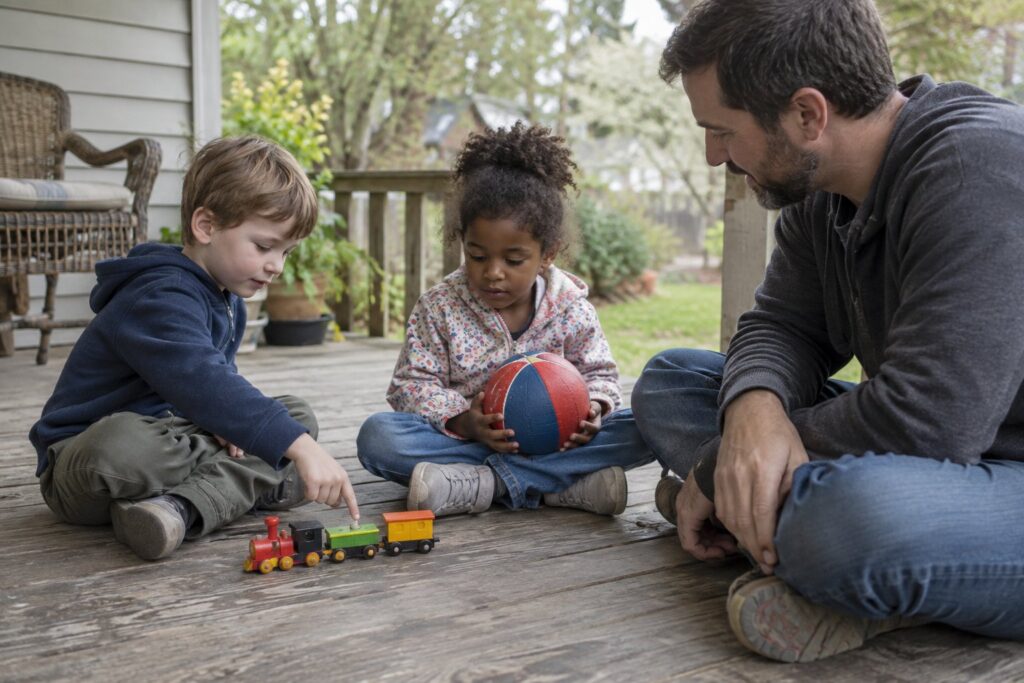
One child wants the pretend shop to sell pizza. The other insists it's a pet store. Within a minute, someone is shouting, “You're doing it wrong!”
Sometimes the problem is simply that two children have different plans. Helping kids disagree politely gives them ways to say what they want, hear another idea, and decide whether they can keep playing together.
You can start with small disagreements when everyone is fairly calm. A child who is crying or trying to grab a toy may need you nearby before they're ready to discuss the rules of a pretend shop.
Make room for two different ideas
When your child dislikes someone's suggestion, help them describe their own preference. “I want to play trucks” is much clearer than “Your game is stupid.”
Try offering the words once: “You wanted trucks. You can say, ‘I have another idea.’” Then give them time. They might repeat part of it, point to a truck, or ask you to explain for them.
Avoid insisting that one child admit the other's idea is better. Both can have a favorite. Whether they can combine those favorites is a separate question.
You can practice this yourself over something ordinary: “You like the funny story. I like the animal book. We have different favorites today.”
Pause the argument without picking a winner
Move close enough to hear what each child wants. If they're pushing or throwing, stop the unsafe action first and help them get some space.
When they're ready, give each child a turn. Keep your summary short: “You want a pet store. You want pizza.” Check that you've understood before offering a solution.
NAEYC's family guide to solving problems recommends agreeing on the problem and inviting children to suggest solutions. In a play disagreement, you can use that approach by asking, “What could we try?”
For a younger child, two concrete options may be enough. A child who enjoys talking through ideas may want longer. You don't need to turn the discussion into a vote or a formal meeting.
Teach a phrase they can actually use
“Respectfully express your opinion” won't help much beside a collapsing block house. Choose words short enough to remember:
- “I have another idea.”
- “Could we try this?”
- “What do you want to do?”
- “I don't want to play that.”
Practice one phrase during pretend play. You might suggest building a blue house and let your child suggest red. Answer without making them persuade you: “Red could work. Tell me where you'd put the door.”
At another moment, keep your own preference: “I still want a blue one. Could we make two houses?” Your child gets to see a disagreement continue without anyone being unkind.
If directing every part of a game has become a pattern, our guide to helping a child who often takes charge explores that broader issue. Here, you're practicing what to say when another person has a different plan.
Offer a few ways forward
Children may need help finding an option beyond “my way” or “your way.” Suggest one or two possibilities and see what they think.
Combine part of each idea. Could the pretend pet store have a pizza counter? Ask both children. Combining ideas only works if both actually want the new game.
Try one game, then another. Agree on a visible stopping point, such as finishing one pretend delivery. Don't promise a turn so far away that you can't help it happen.
Play alongside each other. One child can make a pet store while the other makes a restaurant, provided there's enough space and material.
Choose something else. Both may prefer drawing to negotiating the shop. That's a workable choice, too.
Give the children a chance to supply an option you haven't thought of. Once they agree, step back enough to let them try it.
Keep personal boundaries out of the bargain
A disagreement about a game is different from a child saying they don't want to be touched. Nobody needs to trade a hug for choosing the next activity or accept rough play to keep a friend happy.
If the objection concerns their body or safety, help them stop the interaction and get support. Our guide to teaching children to say no politely covers personal boundaries in more detail.
Even with ordinary play, children can decline. “I don't want to play that” can be followed by a different invitation, or by doing something else. Help them leave without insulting the other child's choice.
What if one child always gives in?
Check in privately, without deciding that you know how they feel. “You played the game she chose. Was that what you wanted, or did you want help asking for something else?”
They may have been happy to join in. If they wanted a different turn, rehearse a specific request for next time. You can stay nearby to help them make it.
Likewise, the child with the louder opinion doesn't need a label. Point out the action you want changed: “You told him which character he had to be. Ask which one he wants.”
You may still need to end a game when a child keeps being excluded or treated unkindly. A polite phrase isn't a reason to leave them struggling alone.
Return to it briefly, later
After play, choose one moment to notice: “You heard her idea and suggested two shops.” You don't need to review every difficult sentence.
If the game fell apart, wonder about one possible change: “Would more blocks have helped, or did you want different games?” Their answer can guide the next visit. You might set out separate supplies or plan a shorter time together.
For more everyday friendship practice, read our guide to helping your child make friends.
Practice together: two toys, two plans
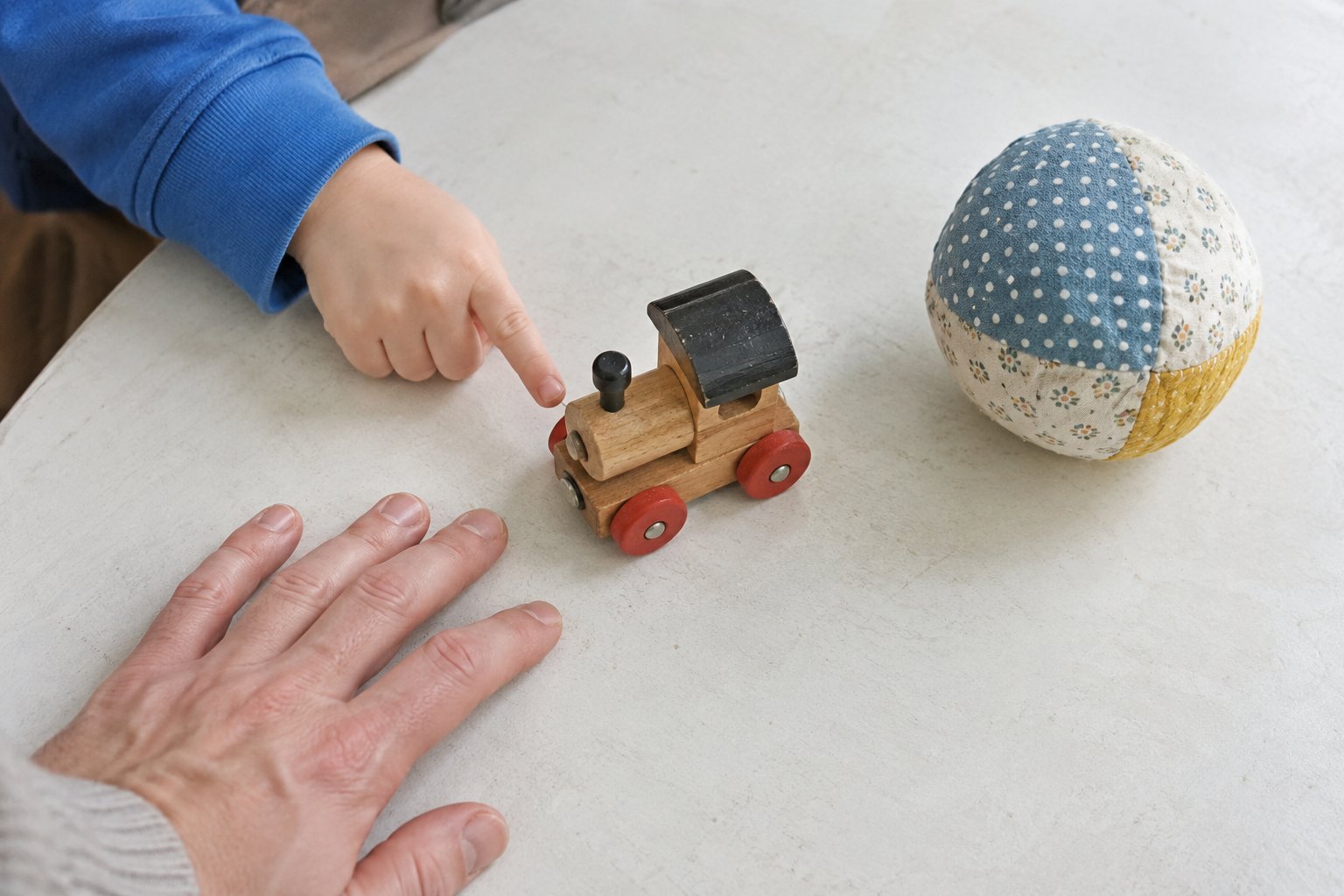
Our Two Ideas practice card turns a small disagreement into a pretend game. Give two toys different plans, help each say what they want, and try one possible solution.
Keep the problem light. Let the toys disagree about a picnic spot or which song to sing. Your child can speak, point, or show the answer through play. Stop when they've had enough, even if the toys haven't agreed.
Further reading
Practice it together
One printable page to keep the ideas close at hand.