Two children are building a pretend store when another child walks over. The new arrival watches for a while, but nobody says anything. Your child may be happy to have company and still have no idea how to make room for someone in a game that's already started.
If you want to help your child include others in play, practice the small things that make joining easier. Explain the game, offer a useful part, or make some space beside you. “Be nice and let them play” often needs a little more explanation.
You can help without assigning your child a best friend or making them responsible for everyone's happiness. Stay nearby, offer a few words when needed, and pay attention to what each child actually wants.
Notice the child before making an invitation
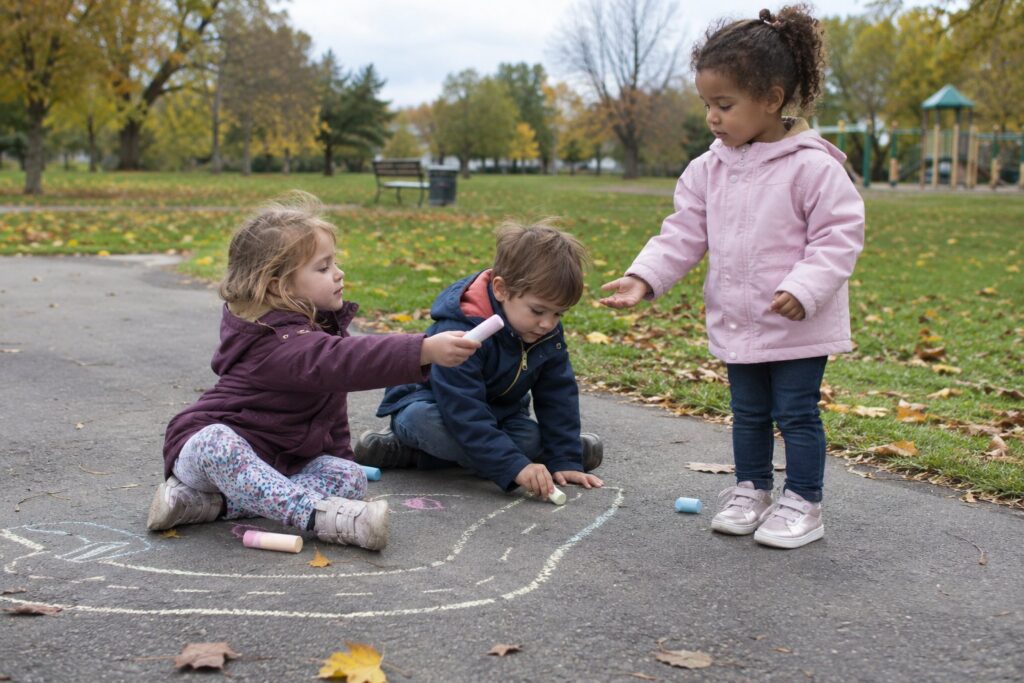
A child standing nearby might want to join, watch, or carry on with something else. Try a quiet observation: “Sam is looking at your road. Would you like to ask if he wants to draw with you?”
Avoid announcing, “Poor Sam has nobody to play with.” That can embarrass the child you're trying to welcome. You don't need to explain their circumstances or turn your child into a helper with a special assignment.
Ask once and leave room for an answer. A nod, gesture, sign, or communication device can be an answer, too. If you're unsure, give the child time rather than speaking over them.
Explain what you're playing
Joining an established game can be confusing when everyone else knows the story. Help your child give a short explanation: “We're making a store. These are the groceries.”
Then offer a clear invitation. “Would you like to put food on the shelf?” gives a child more information than “Come on, play!” They can see what they would be doing.
For a block game, try: “We're building a zoo. Do you want to make somewhere for the giraffe?” For chalk drawing: “This is our road. You can draw a house beside it.”
Let the new child suggest something as well. If they want the giraffe to have a pond, your child can consider that idea instead of handing out instructions for every move.
Make enough room and materials available
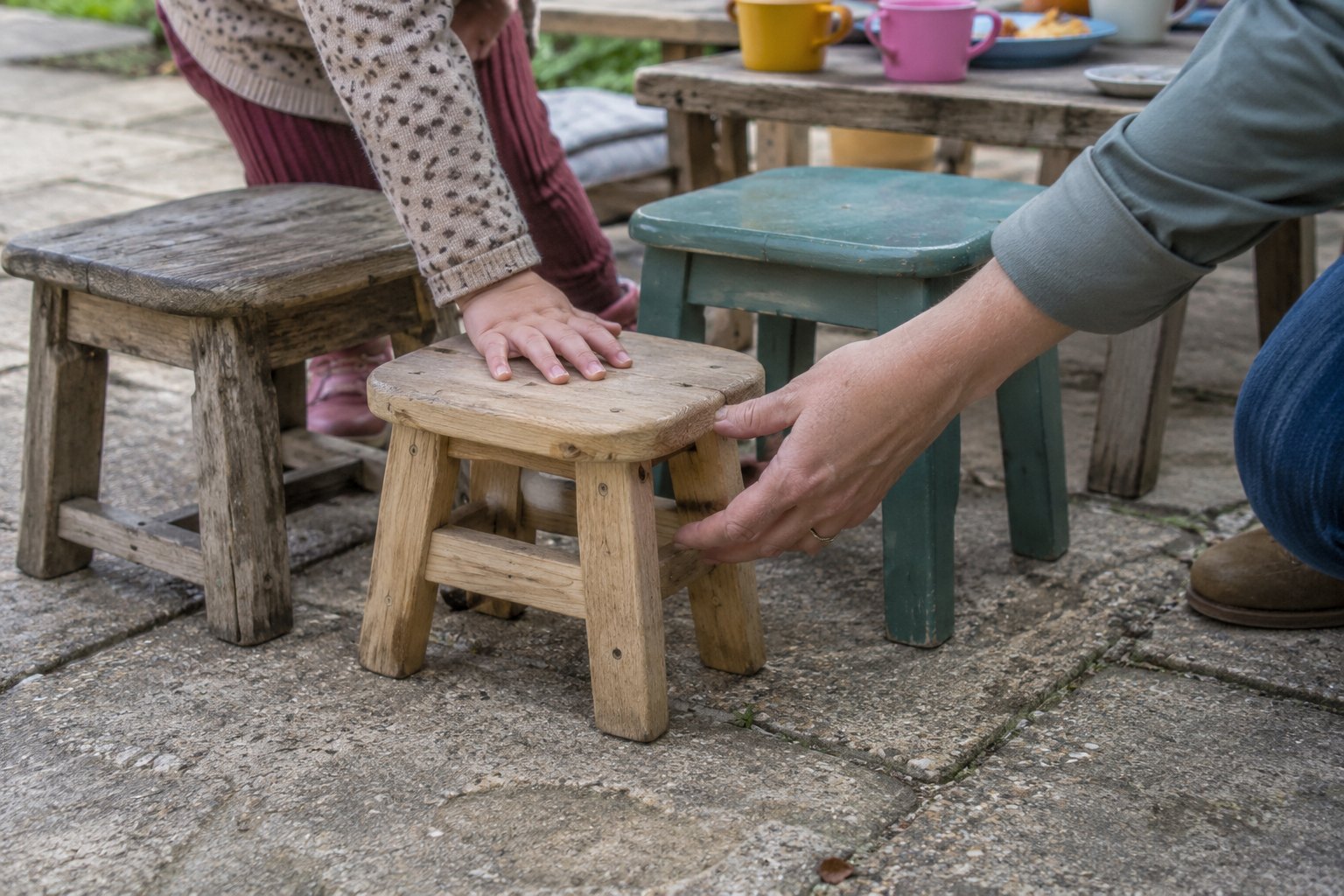
An invitation is easier to accept when there's somewhere to sit and something to use. Look for practical barriers before asking children to try harder.
You might move a basket, bring another sheet of paper, or ask whether the construction could use a second builder. Keep walkways clear and leave enough space for anyone using mobility equipment. Ask what would help rather than moving someone's equipment for them.
With younger children, playing alongside the group may be a comfortable place to start. They could draw on their own paper near the other children instead of joining a complicated pretend story immediately.
ZERO TO THREE recommends staying involved as young children practice friendship skills. Its suggestions include helping children work together and turn to peers for help. You can offer that support without deciding every part of their game.
Offer a part worth having
Sometimes a child says someone can join, then assigns them a role with nothing to do: “You can be the baby, but you have to stay asleep.” Listen to what the invitation actually offers.
You could ask, “What could the baby do in this game?” or suggest another possibility: “Could there be two shopkeepers?” The aim is to find a way for everyone who wants to join to participate.
Avoid requiring the newcomer to accept the least interesting role as the price of being included. If the game has become too complicated, help the children simplify it or offer another activity nearby.
Our broader guide to helping your child make friends has more ideas for supporting conversations and shared play.
What if your child wants to play alone?
Children can want quiet, time to finish something, or a break from company. You can help them communicate that without insulting another child.
Try: “I'm finishing this picture by myself,” or “I want some quiet time.” Don't promise “You can play later” unless there's a real plan your child is willing to follow.
In a shared play area, wanting space doesn't give one child control of all the equipment. You can say, “You can build your tower here. The other blocks are for everyone.” Help arrange separate places if that makes playing easier.
If children repeatedly target one child with hurtful exclusions or comments, involve the supervising adult. Don't leave it to the excluded child to keep asking nicely. A teacher or caregiver can look at what is happening across the group and help make shared activities accessible.
Accept a declined invitation
Your child might feel disappointed when someone says no. Give them a simple response: “Okay. We're over here if you change your mind.” Then help them return to their own activity.
Don't keep persuading the other child or ask why they won't join. They may be tired, interested in something else, or comfortable watching.
You can explain afterward: “You asked if she wanted to draw. She wanted to keep reading.” Your child's invitation was still considerate even though it didn't lead to a shared game.
The same respect applies to physical contact. Joining a group doesn't mean agreeing to hold hands or sit close. Our guide to helping children understand personal space offers more ways to discuss that.
Practice together before the next outing
Use our Make Room to Play practice card with three toy figures. Two begin a game, and the third arrives. Help your child explain the game and offer something the visitor could do.
Try a second round where the visitor only wants to watch. In another round, one toy is finishing a project alone. Keep the practice brief enough that your child still wants to take part.
At the next playground or playdate, look for one useful moment to help. You might say, “You could tell him where the road goes,” then let the children decide what happens next. Later, mention the action you noticed: “You moved your bag so she had somewhere to sit.”
For other things to try at home, explore our free parent resources.
Further reading
Practice it together
One printable page to keep the ideas close at hand.