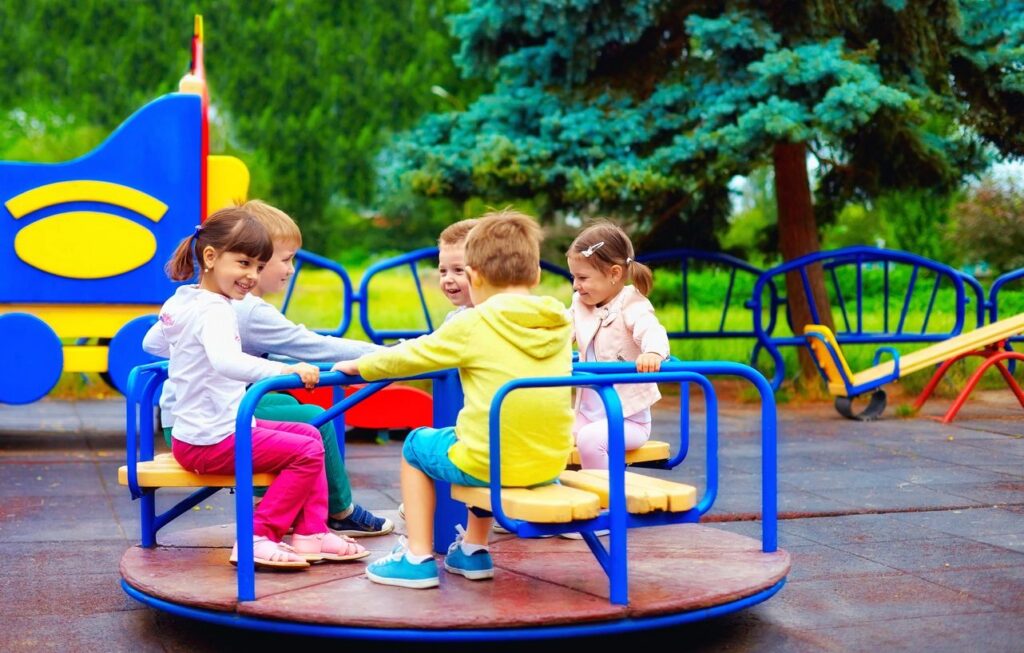
A friend's house has different toys, different rules, and perhaps a dog your child desperately wants to follow. Even a familiar friend can feel different on their own territory.
You can help your child prepare for a playdate without giving them a long list of instructions in the car. Choose a few things to practice: asking before taking something, treating belongings gently, and helping put away what they used.
These playdate manners are for ordinary visits to a friend's home. Your child will still need help, and you may spend part of the visit sitting on the floor beside them. That's fine. Being a thoughtful guest takes practice in actual homes, with actual toys someone else wants to keep.
Start with the adult conversation
Before the visit, agree on a start and finish time and who will be supervising. Explain any allergies, access needs, or other information the caregiver needs. Ask about pets and whether there are rooms or activities the children won't be using.
The American Academy of Pediatrics recommends discussing household rules and safety before a playdate, including supervision, pools, and firearm storage. These are adult responsibilities. Teaching a child to ask permission doesn't replace checking that the environment is safe.
For an unfamiliar home, staying together may be the arrangement that works best. Tell your child what you've agreed: “I'm staying with you. We'll play, have a snack, and leave before lunch.” Don't promise a specific activity unless you've checked it with the host.
Pick three things to remember
Keep your child's version much shorter than the adult conversation:
- Ask before taking or opening something.
- Use gentle hands with people and belongings.
- Help put away the things you used.
Practice one during play at home. Pretend you're visiting your child's toy kitchen and ask, “May I use this cup?” Let them answer. Sometimes they can say yes; sometimes the cup is already being used.
For a younger child, you can supply the words during the visit. A child who communicates with gestures, signs, or a device can use those to ask, too. The important part is giving the other person a chance to respond.
Arrive without rushing into the toys
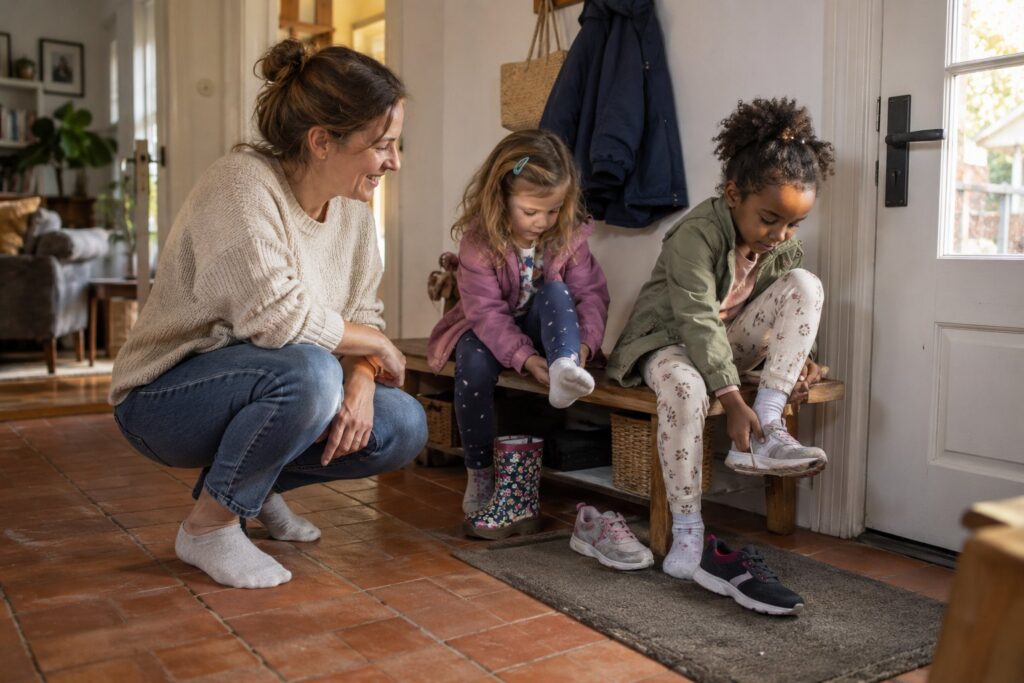
Greet your host, then ask where shoes and bags belong. Let your child help with their own things if they can.
“Where would you like our shoes?” is a useful question for them to hear. Different households do things differently. You can follow a house rule without suggesting your family's way is wrong.
Pause before entering a bedroom or opening a cupboard. Ask which space is ready for play. Your child may need you to stay close and repeat, “We're playing in here today.”
There's no need to require a big greeting, a hug, or a performance of every polite phrase they know. A wave and a little time to settle may be enough.
Ask which toys are available
A toy in someone else's home isn't automatically available to visitors. The host child may have special belongings put aside or a project they want left alone.
Help your child ask, “Can I play with this?” If the answer is no, offer somewhere else to start: “That one is staying on the shelf. Shall we try the animals or the blocks?”
If both children want the same toy, stay nearby and help them work out a turn or another activity. Avoid promising your child an immediate turn with something that belongs to someone else.
Our guide to teaching sharing and taking turns offers more ways to practice. During a visit, keep your language short enough for children to use: “Can I have a turn when you're finished?”
Treat snacks as an invitation
Ask before opening the refrigerator or helping yourselves to food. Let the host know any food restrictions beforehand, and stay involved in checking what your child can safely eat.
If your child doesn't want what's offered, help them say, “No, thank you.” They don't need to taste something to prove they're a good guest.
If “That's disgusting!” comes out, respond briefly: “You can say no, thank you.” Save a longer conversation for home. An embarrassed child and a waiting host don't need a public lecture.
You can bring an agreed snack if that makes the visit easier. Ask first, since the other family may have allergies or food preferences of their own.
Step in when play gets difficult
If your child grabs, pushes, or uses a toy roughly, move close and stop the action. “I won't let you throw that. Let's put it down.” Check on anyone who was hurt, and help your child take a break if needed.
For a spill or an accidentally toppled construction, offer a manageable repair: fetch a towel, gather blocks, or ask whether help rebuilding would be welcome. The adult can handle anything broken or unsafe.
If the children can't comfortably return to playing, it's okay to leave early. Thank the host and follow through calmly. You can talk later about what might help another visit.
Some visits need more adult support than others. Our article on helping your child make friends has ideas for supporting play beyond a single afternoon.
Make leaving part of the plan
Give a clear heads-up before you need to go: “We have time for one more puzzle. Then we'll put it away and get our shoes.” Choose a stopping point you can reasonably keep.
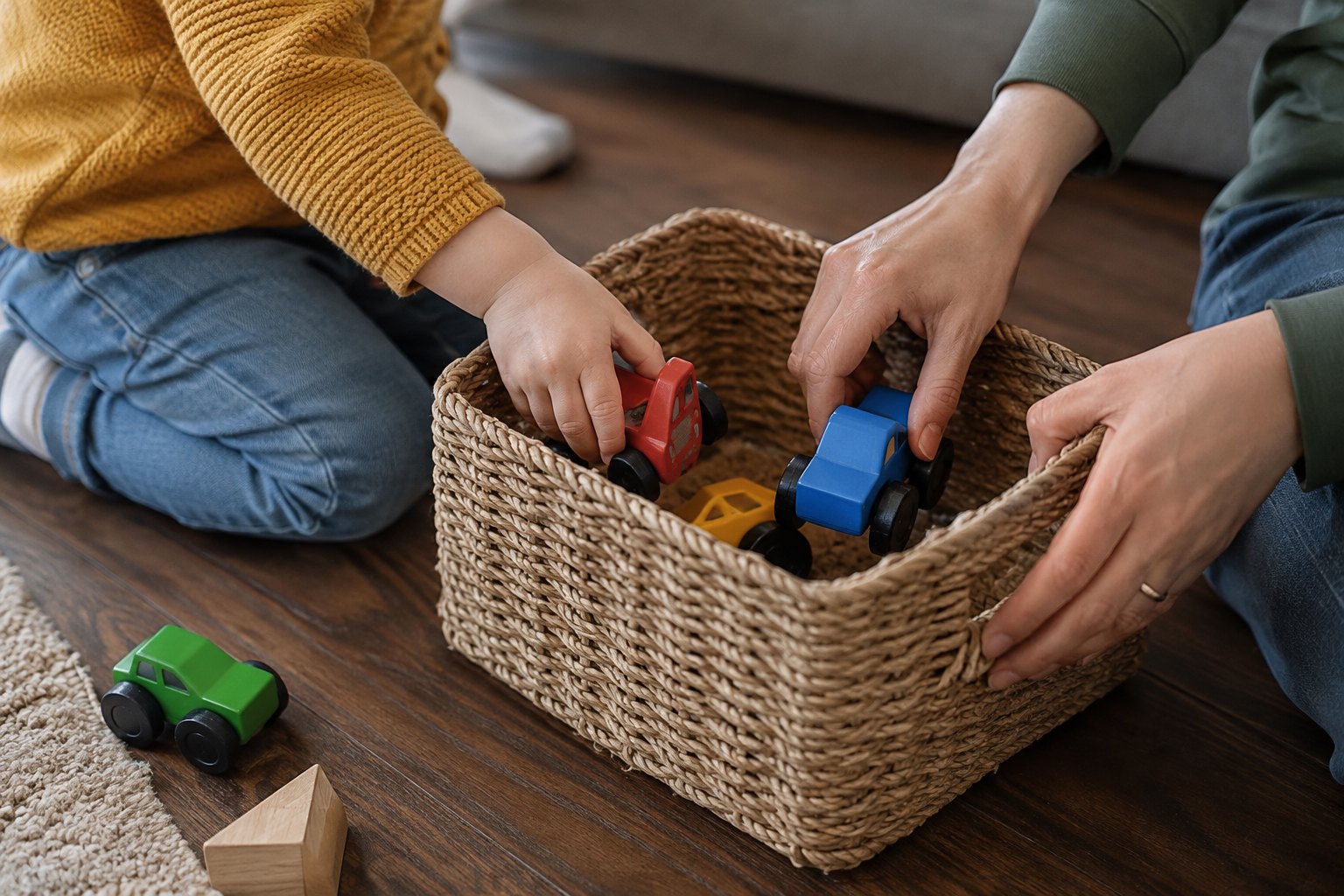
Ask the host where things go, then give your child one small cleanup job. Carrying the cars to a basket is clearer than “Clean this whole room.” Work alongside them.
Thank the host yourself. Your child can add a thank-you, wave, or say goodbye in their own way. If they're upset about leaving, you can acknowledge it while getting ready: “You wanted more time. We're going home now.”
Practice together: a pretend visit
Try our Little Guest practice card before the next playdate. Take turns being a visitor and a host with a few toys. Practice asking to use something, accepting an answer, and putting it back.
After the real visit, mention one thing that went well: “You asked where the cars belonged and helped put them away.” Keep any next step small enough to try next time.
Further reading
Practice it together
One printable page to keep the ideas close at hand.