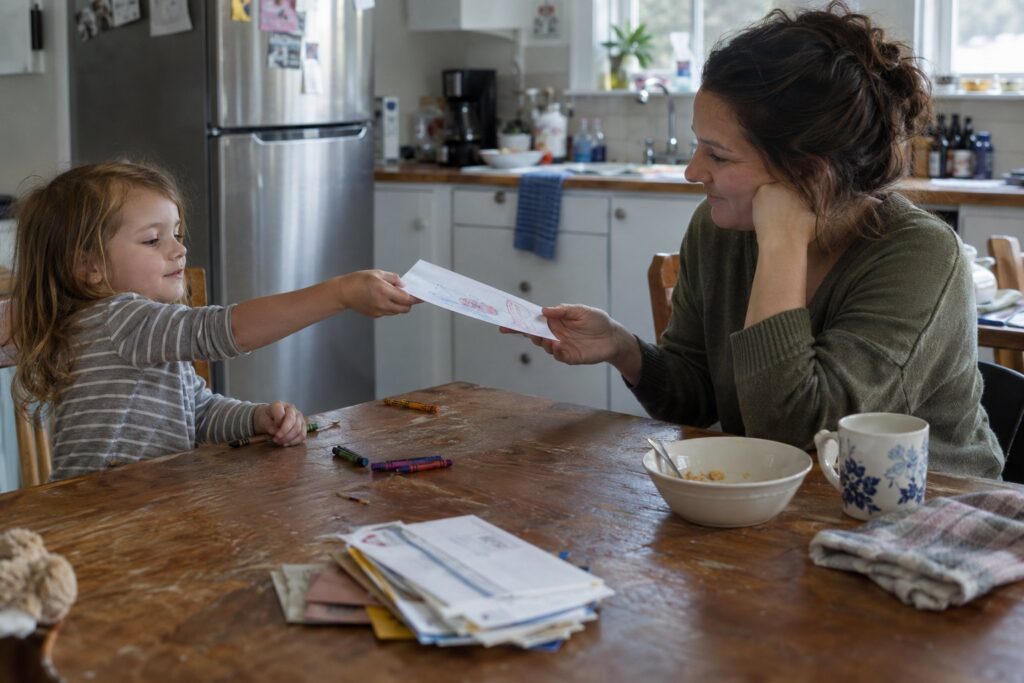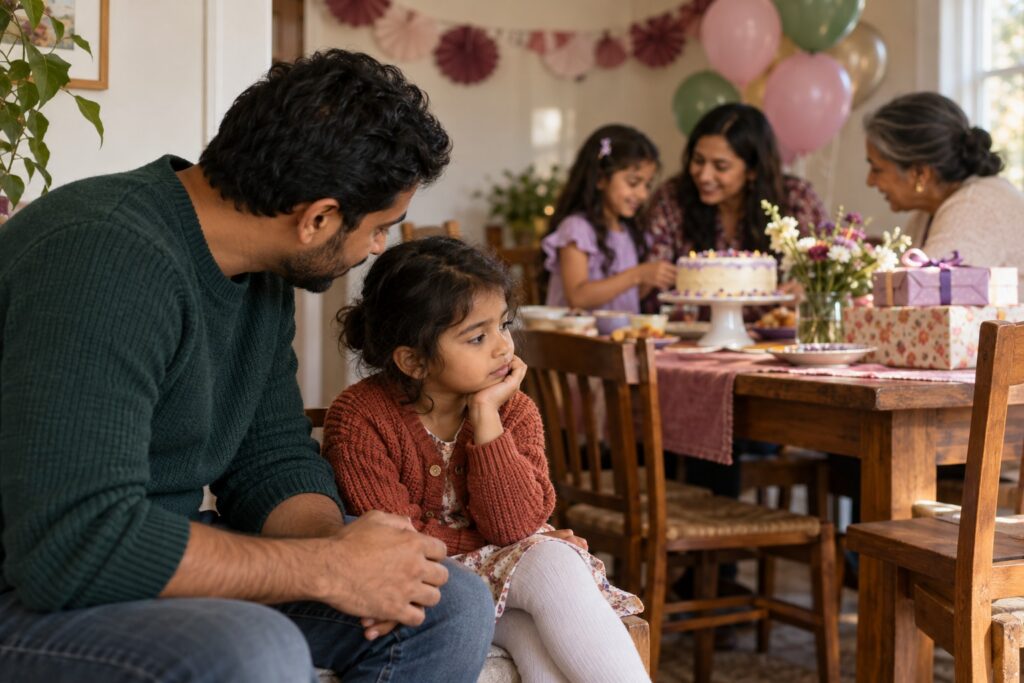
Help your child make room for jealousy and disappointment while keeping their sibling’s celebration their own.
The birthday candles are ready. Your child has waited beside their sister all afternoon, and now they want to blow them out, too. When you explain whose turn it is, the tears arrive before the song.
You can protect the birthday child's moment without calling the other child selfish or demanding a happy face. “You wanted to blow the candles. Today they are Ava's. You can stand with me while we sing.”
When a child feels left out on a sibling's birthday, they need help with two things at once: understanding what belongs to the celebration and finding a manageable way to join it. A little preparation, a clear boundary and an available adult can make that combination easier.
Mini Manners · Practice together
Someone Else’s Special Day
Practice with two toys before a family birthday. An adult helps with the feelings and the plan.
- Notice the feeling. One toy wishes the birthday presents were theirs. What could a grown-up say?
- Keep the boundary. The birthday toy opens its own present. The other toy can sit with a grown-up or take a break.
- Choose a kind way to join. Try a birthday greeting, a drawing or joining a game. A helping job is optional.
Words to try
“You wish it were your birthday today.”
“That present belongs to your sister. I will help you find something to do.”
“Would you like to sit with me or take a quiet break?”
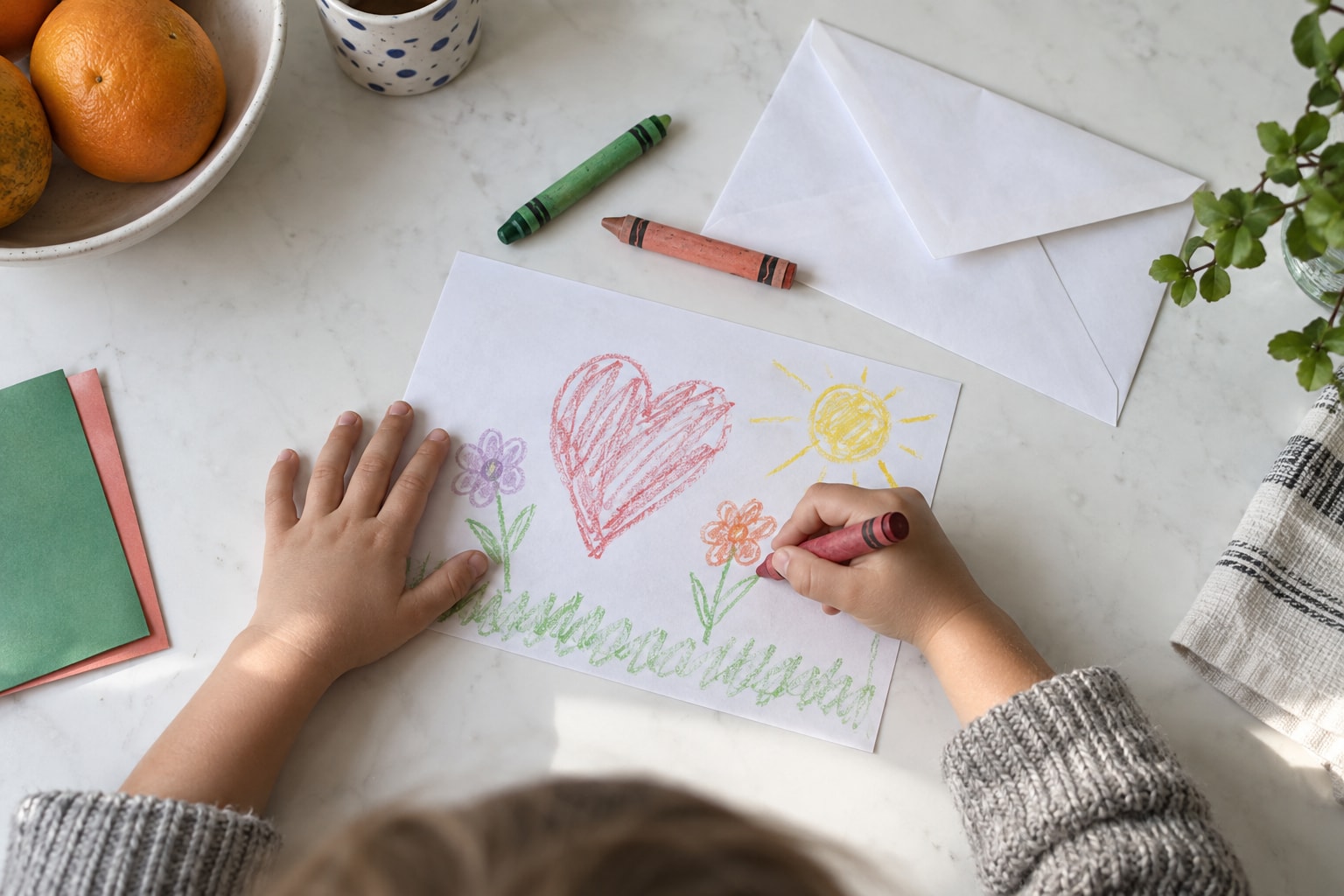
Try it: Draw a kind way you could join someone else’s celebration.
Children do not have to hide disappointment or accept affection. Adults protect each child’s celebration, boundaries and safety.
Explain what will be different today
Before guests arrive, describe a few things your child will see: “People will bring presents for Leo. We will sing to him, and he will open his gifts.” Keep the explanation short and concrete.
You do not need to promise that the day will feel equally exciting for everyone. Instead, tell your child where they fit: “You are coming to the celebration, and I will help you if you need me.”
If they ask when their birthday will come, use your usual family calendar or a familiar season. Avoid relying on a faraway date to make present disappointment disappear. “Yours is later in the year” can be true without becoming the only answer to every difficult feeling.
Keep ordinary needs in view, too. A snack, rest or quiet activity may be more useful than one more conversation about how birthdays work.
Name the feeling without making it their identity
“You wish those presents were for you” says more than “Don't be jealous.” It describes what is happening without labeling your child as the jealous one in the family.
Try a tentative observation rather than insisting you know: “It looks hard to watch everyone gather around the presents. Would you like to sit beside me?” They might want company, space or help finding something else to do.
Nationwide Children's Hospital's sibling-rivalry guidance encourages listening to children, spending time with them and avoiding comparisons. You can bring that approach to a birthday without turning an ordinary upset into a diagnosis.
Do not compare siblings' reactions: “Your brother was happy at your party.” This child still needs help with this moment.
Separate feelings from actions
Your child can feel disappointed. They cannot take over the cake, pull open someone else's present or hurt another person.
Move close enough to help before repeating the rule across the room. “I won't let you grab the gift. It belongs to Maya. Come and sit with me.” Keep sharp objects, candles and other party hazards under adult supervision.
You can offer a next step without bargaining away the birthday child's choice: “You may watch from here or look at this book with me.” Do not promise that a sibling must share a new present immediately to solve the upset.
If something unkind has already happened, attend to the person affected and help with repair when everyone can manage it. A brief adult apology can bridge the moment. A forced public speech is not required to keep the celebration moving.
Offer a way to join, not a job they must accept
Some children enjoy choosing the birthday napkins, helping make a card or handing an adult a decoration. Offer one or two small, safe choices before the busy part begins.
“Would you like to choose a song for the car ride or draw a picture for your sister?” leaves room for a no. Your child does not need to become the assistant host or perform enthusiasm to deserve your attention.
Ask the birthday child before involving their sibling in a personal moment. They may want to open a present alone or choose who stands beside them in a photograph.
Avoid arranging a special role that makes one child responsible for the other's happiness. Adults remain responsible for the party, the guests and supporting both children.
Keep connection available without creating a second birthday
You do not need to match every gift or arrange another cake to show that your child matters. A short conversation, a cuddle if wanted or a quiet game with another trusted adult can offer connection without replacing the occasion.
Tell them what you can actually do: “I am putting the food out. Then I can look at your drawing with you.” Follow through, or explain a change rather than disappearing into hosting tasks.
If two adults are available, agree beforehand who can step away with a child. This also protects the birthday child from feeling responsible for ending their sibling's distress.
Different families have different traditions about small sibling gifts. Whatever yours is, explain it ahead of time. Do not introduce a surprise present as a condition for stopping tears or use it to avoid acknowledging disappointment.
Make a break ordinary
Choose a quieter spot where an adult can stay with your child. A bedroom with a familiar book or a few minutes away from the group may give them room to settle.
Say, “We can take a break together,” rather than “Come back when you can be happy for your sister.” A child should not have to produce a different feeling to receive your support.
They can rejoin when it works, perhaps for one activity rather than the entire celebration. If a guest asks where they went, a simple “They're having a little quiet time” protects their privacy.
Watch a story, then practice a kind choice
The Mini Manners episode about celebrating others offers a starting point for talking about another person's special day. Watch together when the party is not already happening.
Ask, “What could we say when someone else is celebrating?” Accept a short answer or offer one yourself: “Happy birthday. I hope you have fun.” Your child may choose words, a drawing or simply joining an activity.
After the celebration, notice something specific: “You gave Leo space to open his gift.” If the day was difficult, choose one adjustment for next time. The goal is not a child who never feels left out. It is a child who knows an adult will help them handle that feeling while another person has their turn to celebrate.
Keep the practice card nearby
Use the one-page card if it helps. You can also try the activity without printing anything.