Your child opens a present and announces, “I already have this.” Or they were hoping for a toy and find a sweater. The giver is watching, and you wish you could quietly disappear with the wrapping paper.
You can help your child thank someone without asking them to pretend the gift is their favorite. A simple “Thank you for the present” acknowledges the person who thought of them. There is room to talk about disappointment later, away from the gift giver.
For young children, that distinction needs practice. Start before the next celebration, with a short conversation and a few words they can actually remember.
Keep the thank-you honest
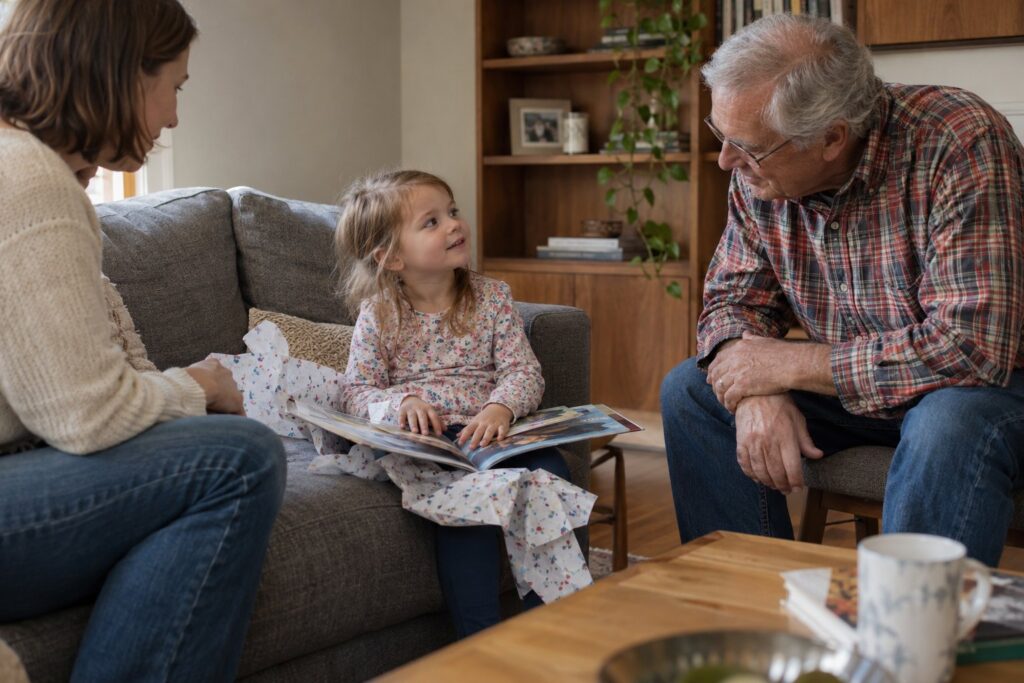
Explain that someone chose or made something for them: “Grandpa thought about you and brought a present. We can thank him for that.”
Avoid coaching your child to say “I love it” if they don't. Offer language that can be true whatever is inside:
- “Thank you for the gift.”
- “Thank you for thinking of me.”
- “Thank you for making this for me.”
One sentence is enough. A younger child may manage “Thank you,” a sign, or a wave while you speak. A child who uses a communication device can use it here, too. Leave time for their response, without turning the room into an audience waiting for the right words.
You can model appreciation yourself: “Thank you for bringing something for Maya.”
Rehearse with something ordinary
Put a familiar household object in a reusable bag. Take turns being the giver and the receiver. A sock, wooden spoon, or small book will do; you aren't testing whether your child can hide a reaction.
When it's your turn, open the bag and say, “Thank you for the present.” Let your child choose their own short response. Two or three rounds are plenty.
Then explain what they can do if they feel disappointed: “You can tell me about that when we're alone. If you need a break, come sit with me.”
Keep the practice relaxed. There is no need to invent an elaborate story about someone spending all their money, or to compare your child with children who receive fewer gifts. The useful skill is finding a considerate, truthful response.
If an awkward comment comes out
Take a breath before you correct it. You can acknowledge the giver yourself: “Thank you for choosing this for him.” Then help your child with a quiet prompt: “You can say, ‘Thank you for the gift.’”
If they can't manage it, move the moment along. Repeatedly asking “What do you say?” while everyone watches is unlikely to make the exchange feel easier.
Save the longer conversation for later. “You said you didn't like the present. That could hurt someone's feelings. Next time, you can thank them and tell me about your disappointment privately.”
Don't make your child announce that they love the gift after saying the opposite. A brief apology may be appropriate for a hurtful comment, but adults can help with that once the child is ready to talk.
Listen to the disappointment afterward
In private, give your child room to explain. “You hoped it would be the truck, and it wasn't.” You don't have to persuade them to like the sweater before the conversation can end.
You can hold the limit on how people are treated: “You can feel disappointed. We still speak kindly to Grandma.” If your child needs quiet first, wait to discuss the words they might use next time.
Keep decisions about returning or exchanging a gift separate from the thank-you. You can work out what's practical later. Avoid promising an immediate replacement just to stop an uncomfortable reaction.
Some children may dislike how clothing feels or feel overwhelmed by a noisy toy. Listen to what is bothering them. You don't need to require them to wear or play with something uncomfortable to prove they appreciate the giver.
Let gratitude take more than one form
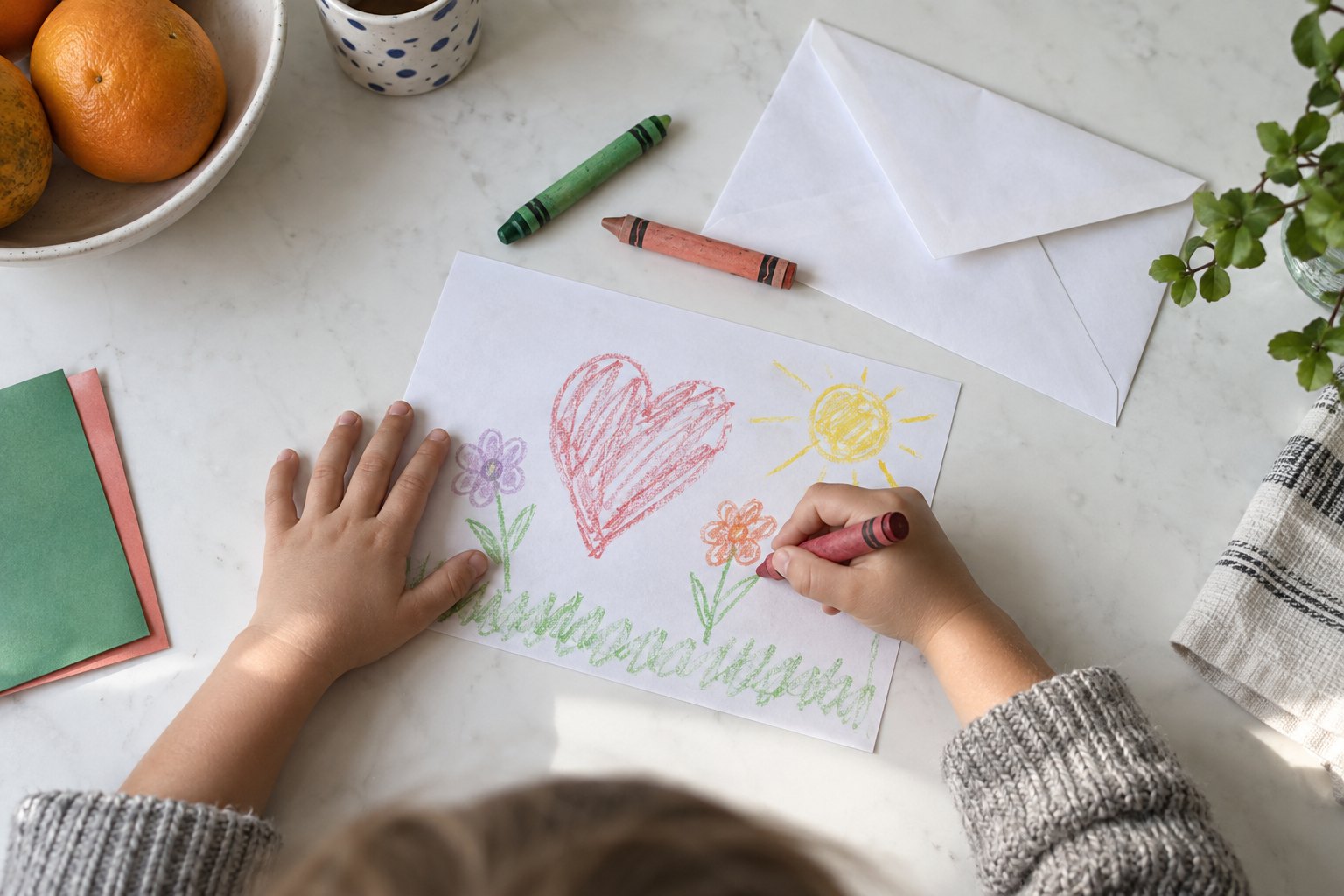
A thank-you can happen in person, on a call, through a drawing, or in a short note. Choose a way your child can take part in comfortably.
For a younger child, you might write their name beside a drawing. An older preschooler could dictate a sentence while you write. Ask a specific question: “What would you like to tell Aunt Jo?” You can help them begin without supplying a glowing review of the gift.
The American Academy of Pediatrics encourages sincere spoken or written thanks and adult role modeling. In your own thank-yous, let your child hear you notice someone's effort: “You remembered I like to read. Thank you for the book.”
Our article on how kids learn by watching you has more ways to make everyday examples part of family life.
Take some pressure off the occasion
When you're hosting, consider opening gifts with fewer people around, or later if the gathering is already tiring. There is no need to make a young child perform a response to every package in front of a crowd.
You can tell relatives your plan beforehand: “We're practicing a simple thank-you. We'll help if she gets stuck.” Photos, hugs, and kisses can stay optional. A gift doesn't create an obligation to give physical affection.
For more language around those choices, see our guide to helping children understand personal space.
Practice together: choose a thank-you
Use the A Thank-You That Feels True practice card to pick a phrase and try the gift-bag game. Your child can draw a picture afterward or dictate a note to someone who has done something kind.
Appreciation also has a place on ordinary days. Thank someone for finding a lost shoe, saving a seat, or making lunch. Our ideas for creating a family culture of kindness can help you find those everyday moments.
The next gift may still bring an honest, awkward reaction. Help your child through it, then practice again another day.
Further reading
Practice it together
One printable page to keep the ideas close at hand.