

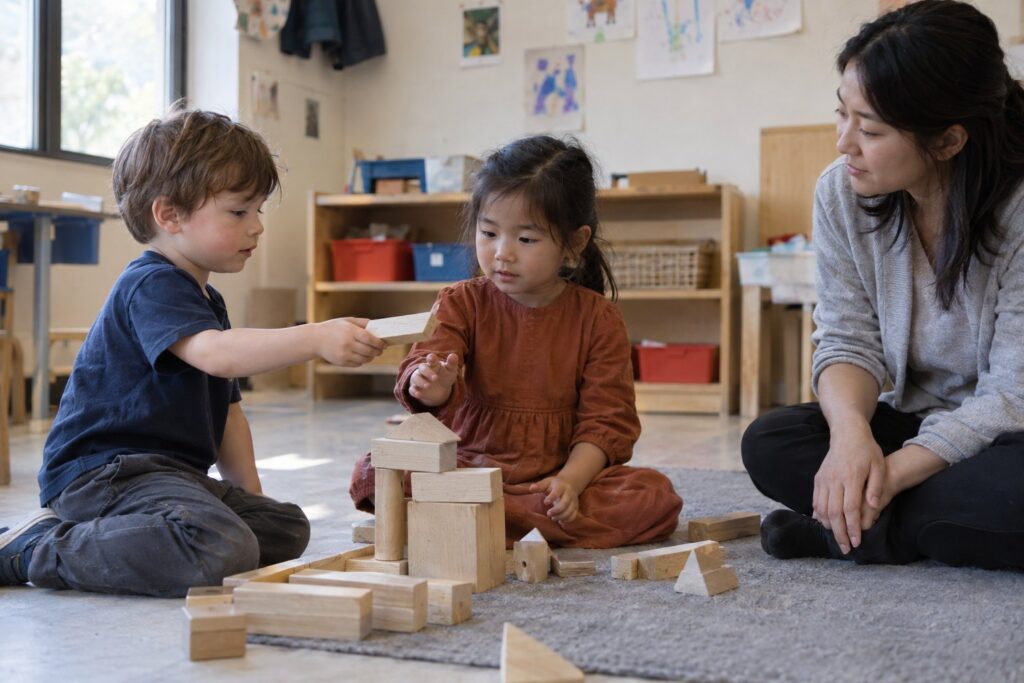
Your child pulls a block from another child's tower, and the whole thing falls. The other child starts crying. With their parent watching, you may find yourself saying, almost automatically, “Say you're sorry.”
It's an understandable response. You want your child to recognize that they've upset someone, and you want the other family to know you're taking it seriously.
When you're teaching your child to apologize, help them work out what they can do as well as what they can say. First, stop any hurting and check on the other child. When your child is calm enough to talk, explain what happened and help them put something right.
Start with the child who was hurt
If someone is pushing, hitting, or throwing, stop the action and separate the children if needed. Keep your words brief: “I won't let you push. I'm moving between you.” Attend to any injury before starting a conversation about manners.
Check on the other child: “Are you hurt? Would you like some space?” At a playdate, involve their caregiver. Your child can stay nearby with you if that is safe; they don't need to be the center of everyone's attention.
If your child is still shouting or crying, save the discussion for later. “I'll help you settle. Then we'll talk about what happened.” You can still return a taken toy or stop a game while you wait until they're ready to listen.
Explain what the apology is for
Once your child is ready to listen, describe what they did without labeling them. Compare “You pulled a block out while Maya was building” with “You're being a bad friend.” Naming the action helps your child understand exactly what needs to change.
Ask one short question: “What happened?” Give your child time to answer without asking several questions in a row. You can recognize what they wanted while explaining why their action wasn't okay:
“You wanted the red block. Pulling it out knocked Maya's tower down. You can ask for a turn; you can't take pieces from her building.”
ZERO TO THREE recommends helping toddlers notice the effect of their actions rather than relying on a required “sorry” to teach empathy. For example, you can point out that the other child is upset and that their building needs fixing. Read its guidance on developing empathy.
Offer a simple way to make things right
An apology can follow this pattern: “I'm sorry I ____. Can I ____?” Supply words your child can use, then leave room for their own. For example:
- “I'm sorry I knocked your tower down. Can I help rebuild it?”
- “I'm sorry I grabbed the marker. Here it is.”
- “I'm sorry I called your picture silly. That was hurtful.”
Not every situation needs a question. Returning something that was taken is a clear next step. For an offer of help, however, the other child gets a choice.
If Maya says, “No, I want to build alone,” respond: “Okay. We'll give you room.” The other child doesn’t have to accept help just because your child offered it.
In NAEYC's educator discussion about mistakes, a contributor recommends focusing on how a child can help resolve an accident. We can use that practical question at home, too, without treating an accident and deliberate hurt as identical. Read the NAEYC discussion.
What if my child refuses to say sorry?
If your child refuses to say sorry, focus first on what needs to happen: “The truck needs to go back. I'll help you return it.” You can offer to speak alongside your child if they’re struggling to find the words.
Try: “Would you like to say it with me, or shall I start?” A child can also point to what needs fixing, hand back an item, or help with a repair. Don't make a long spoken apology the only way to participate.
Later, revisit the incident privately: “We returned the truck. Next time, what could you say before taking it?” If toy disputes are a recurring challenge, our guide to helping children learn to share offers another conversation to practice outside the disagreement.
Don't require a hug or immediate forgiveness
Saying sorry doesn't mean the other child is ready for a hug or wants to keep playing. Skip “Give them a hug now” and “Tell them it's okay.” Either child can decline physical contact, and the child who was hurt may still feel upset.
Offer a response they can use: “Thank you for saying sorry. I want to play by myself for a little while.” For your child, try: “You apologized. Now we need to respect their answer.”
Avoid asking, “Are you friends again?” in front of everyone. Give the children room to decide what happens next. You can support everyday friendship skills without asking either child to pretend a disagreement never happened.
Practice when nobody is upset
Try a two-minute game with stuffed animals. Rabbit knocks over Bear's pretend picnic. Ask your child to give Rabbit a helpful next step. Perhaps Rabbit picks up the cups, asks whether Bear wants help, or moves the game to a steadier surface.
Then switch roles. Let your child decide that Bear wants space, and have Rabbit respect it. Keep the scene small and playful; this isn't a reenactment of your child's latest mistake.
You can also open the “Make Things Right” practice card and choose one phrase to try together. Use the card to help you remember the steps, and let your child use their own words.
Show what an adult apology sounds like
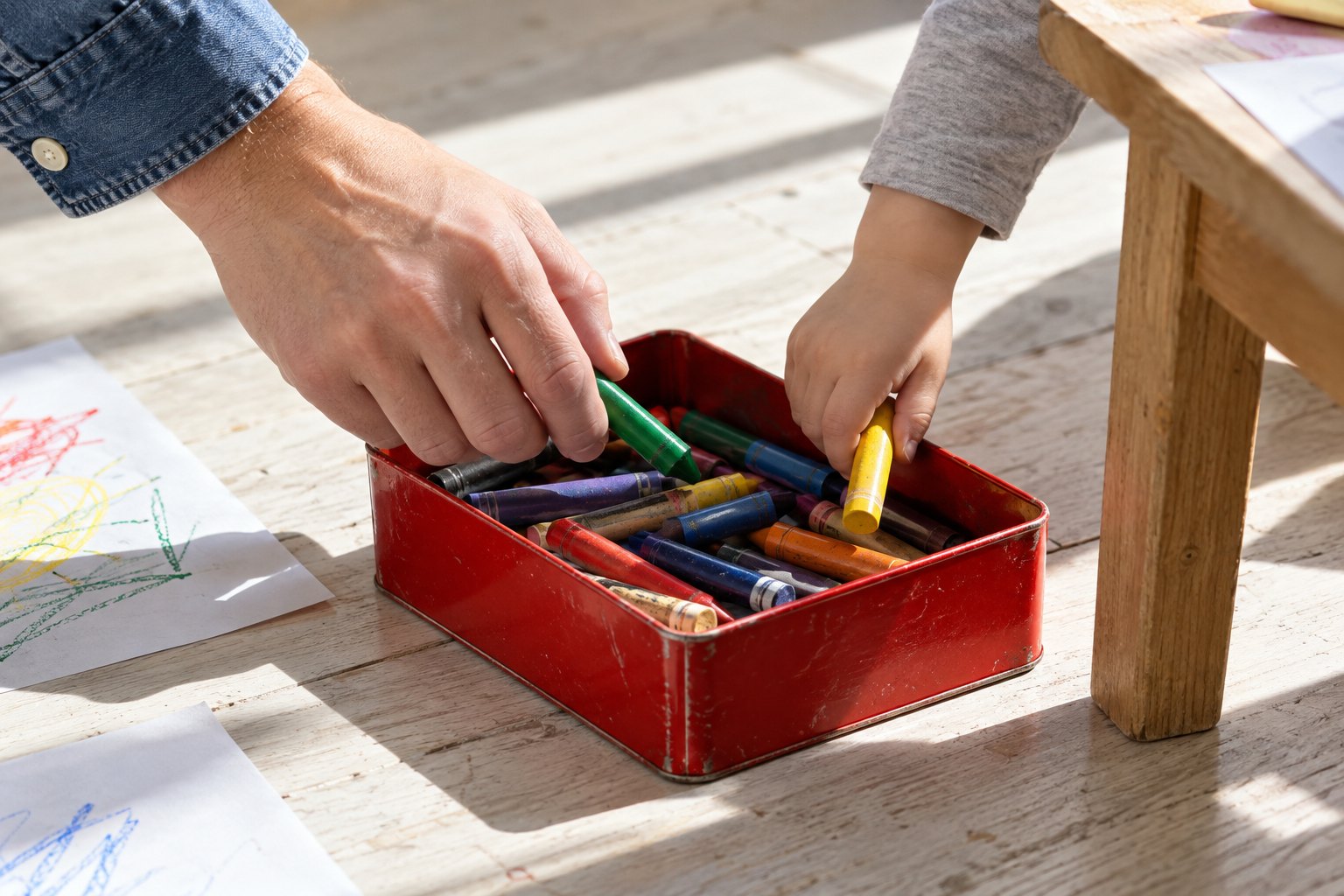
Use an ordinary moment of your own: “I'm sorry I interrupted your story. Please finish; I'm listening.” Or: “I'm sorry I knocked the crayons down. I'll pick them up.” Then give them time to finish, or start picking up the crayons.
Leave out the “but you made me” explanation. If you interrupted or made a mistake, say so without asking your child to reassure you or make you feel better about it.
This week's mini win
This week, look for a chance to help your child follow an apology with something useful. Tell them what you noticed: “You returned the marker and gave her room to finish.”
Some days you'll need to supply the words and help with the repair. Keep showing your child what to do, and give them a chance to try for themselves when they're ready.
For another gentle way to start a conversation about everyday manners, explore Mini Manners videos and talk together about one helpful choice you notice.
Further reading
- ZERO TO THREE: How to Help Your Child Develop Empathy
- NAEYC: What to Do When a Child Makes a Mistake
Practice it together
One printable page to keep the ideas close at hand.


