

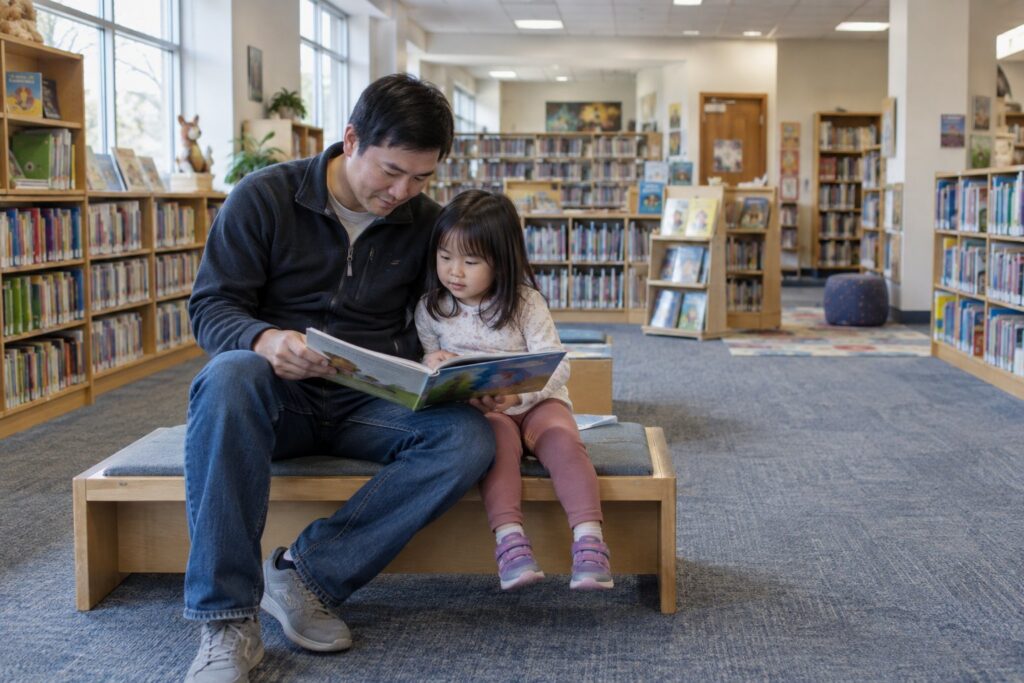
Your child spots a dinosaur on a book cover and announces it to everyone in the building. You reach for a whispered reminder, then wonder whether bringing a preschooler to the library was a sensible idea today.
It was. Children can enjoy libraries while they're still learning how to use a shared space. Library manners for kids can start with a few practical habits: moving safely, looking after books, and noticing when someone nearby needs a little room.
You don't need to rehearse a long list of rules. Before your next visit, choose one thing to practice and make the outing short enough for you both to enjoy it.
Find out what this library expects
A children's room, a study area, and a storytime session can have different expectations. Ask staff where families can read aloud or play and where people need quieter surroundings. Check food rules, too, before unpacking a snack.
Tell your child what you're going to do: “We'll return these books, choose two more, and read one together.” A simple plan is easier to follow than “Please behave in there.”
If your child needs a quieter visit or help accessing a program, contact the branch beforehand. Ask about less busy times and any available accommodations. Don't assume every branch offers the same options.
Show what a library voice sounds like
“Be quiet” doesn't explain how loudly your child can speak. Move close and use the voice you're asking them to try: “Tell me about the dinosaur like this.” They can point while you come over, instead of calling across the room.
You can also explain the reason briefly: “Someone is reading beside us. Let's move closer so we can hear each other.”
Children's activities may include plenty of sound. Lee County Library System's storytime descriptions include music and movement, for example. Follow the program leader's cues about joining in and listening. Singing during a song and lowering your voice beside a study table are both ways to be considerate.
Keep your own conversations at a suitable volume. If you're chatting across the room, your child has a different example to follow.
Give busy hands a book job
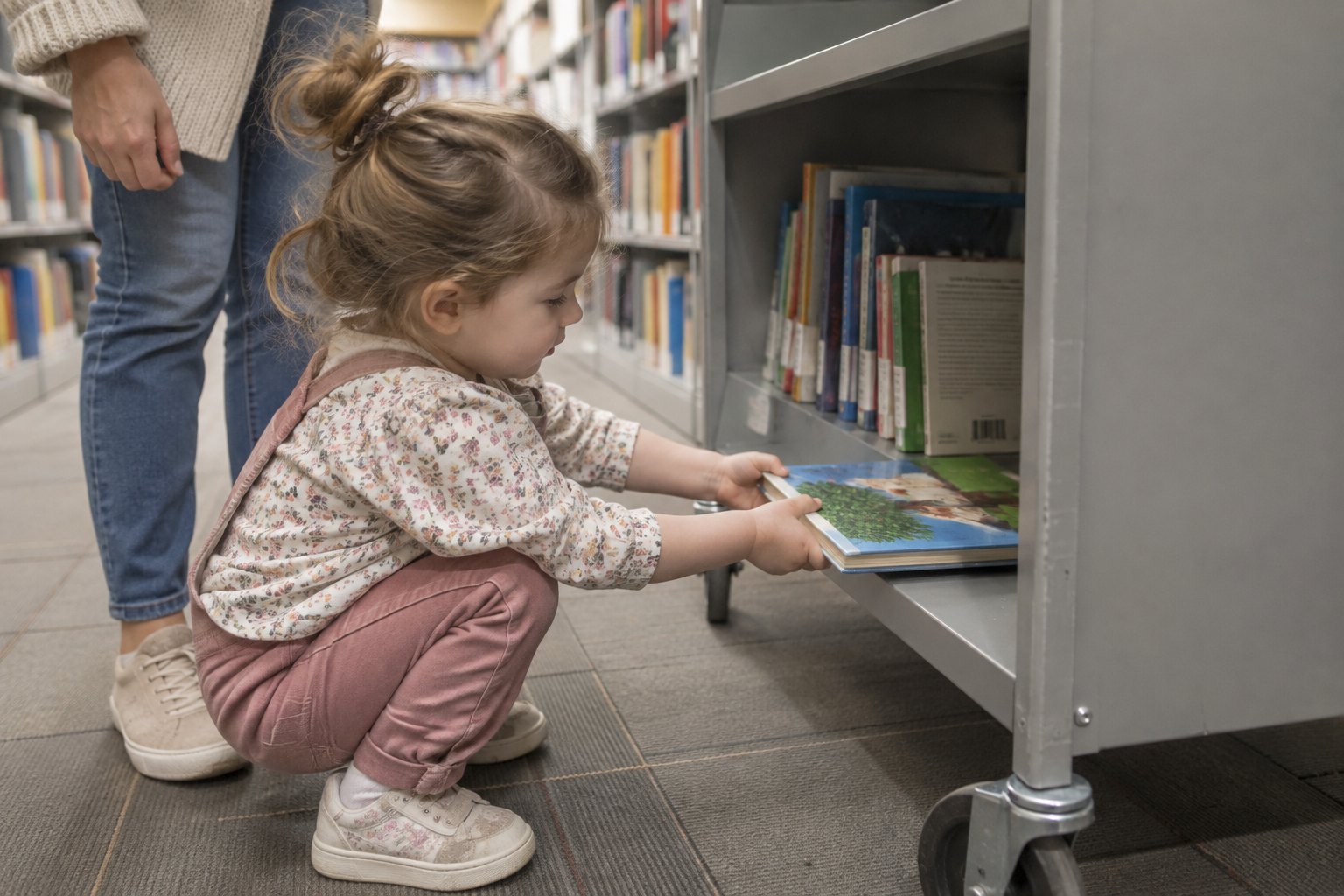
Help your child slide out one book, carry it to a seat, and turn the pages with you. You might say, “Hold this side while I help you find the next page.” Choose sturdy books when that makes browsing easier.
If several books come off the shelf, stay nearby and slow things down: “Let's look at this one first. Then you can choose another.”
Ask staff where to leave books you aren't borrowing. Shelving systems vary. Elsa Public Library, for instance, asks visitors to leave books in designated places rather than reshelving them. Your branch can show you its own system.
If a page tears, tell a staff member. Keep the explanation ordinary: “This page tore while we were reading. Could you help us?” Avoid a secret repair with tape or making your child announce a mistake to the whole room.
Keep paths clear and bodies safe
Walk beside your child when you arrive. Point out the route to the children's area and somewhere safe to park a bag or stroller without blocking an aisle.
If your child is running toward danger, stop them first. Otherwise, move close and give a clear direction: “Walk with me to the red chair.” Stay nearby and take a break together if needed.
A low shelf may look climbable. Explain what to do instead: “Those shelves hold books. Ask me if you want one from the top.”
Personal space matters at a reading table, too. Our guide to helping kids understand personal space offers ways to practice leaving room for other people.
Let storytime be something you learn together
Check the session details before you go. Some programs ask caregivers to join in; others have different arrangements. Arrive with enough time to find the bathroom and settle in without rushing.
If you're participating, put your phone away and follow along. Your child can watch you copy a hand motion or listen while the librarian reads. Joining every action isn't necessary. Watching from beside you may be how they begin.
Lee County's storytime guidance explicitly says participation is encouraged, not required. It also welcomes families back after taking an unsettled child out for a break. Ask your own librarian how breaks work in that session.
Try a quiet choice: “Would you like to sit here with me or take a little break outside the room?” Stay with your child and follow the library's supervision rules throughout the visit.
Help with turns without turning the visit into a lesson
There may be one popular puzzle or a book another child is reading. Name what's happening: “She's using it. We can choose something else while we wait.”
You can help your child ask for a turn, without promising when it will happen. If waiting is becoming difficult, offer another activity or move on. Staff can help with any local turn-taking rules for shared equipment.
Practice at home if this is a recurring difficulty. Our article on helping children learn to share and take turns gives you a related place to start.
Finish before everyone's had enough
A visit can be successful even if you only return a book and read a few pages. Leave room to shorten your plan.
Give a concrete warning: “After this book, we'll check out.” Let your child carry a manageable book or help place it on the checkout counter. You can say thank you yourself if they're tired or don't feel like speaking.
Later, mention something specific: “You moved your bag so someone could reach that chair.” If something was difficult, decide what you'll change next time. Perhaps you'll skip storytime or visit after a snack.
Practice together: open a home library
Use our Little Library Visit practice card with three books and a bag. Take turns choosing a book, asking for help, and checking it out. Include a pretend break so your child can practice asking for one.
Next time, bring just one familiar phrase along. “Can you help me find a book?” is a useful start.
Further reading
Practice it together
One printable page to keep the ideas close at hand.


